Expert Hot Tubbing in International Arbitration: Panel and Live Demonstration


On 7 July 2026, arbitration practitioners gathered at Latham & Watkins' London office to watch expert witness conferencing in action.
Posted 15th Jul, 2026
On 7 July 2026, arbitration practitioners gathered at Latham & Watkins' London office to watch expert witness conferencing in action.
Posted 15th Jul, 2026
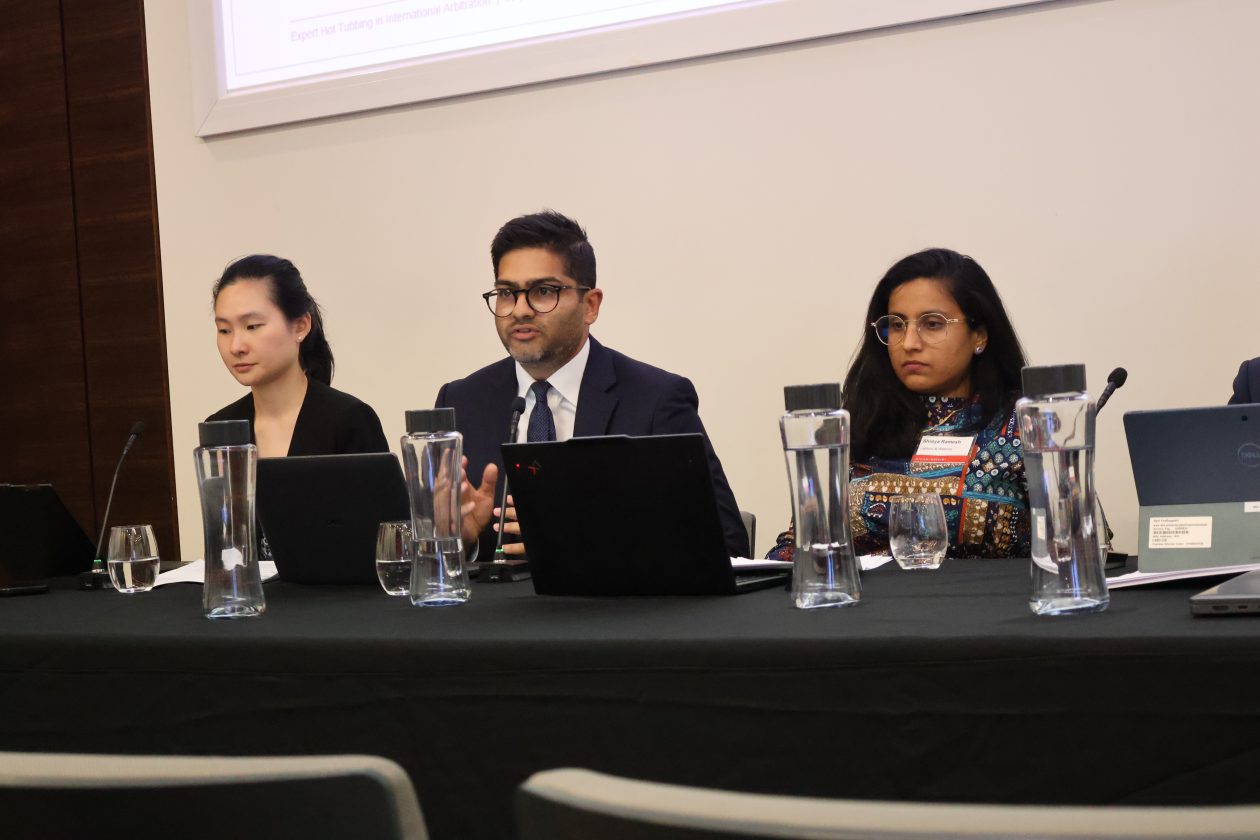
Opening remarks were delivered by committee members of the CIArb Young Members Group London Branch, who welcomed attendees and introduced the rundown of the event and the panellists.
On 7 July 2026, at Latham & Watkins’ London office, seasoned and young arbitration practitioners came together to see expert witness conferencing – commonly known as “hot tubbing” – brought to life through a live demonstration.
The evening was jointly organised by the CIArb Young Members Group London Branch, Latham & Watkins and Analysis Group, and sponsored by Latham & Watkins and Analysis Group. The aim was to move hot tubbing from theory into practice: many practitioners have come across the term, but far fewer have actually seen how the order of questioning is managed, how the experts engage with one another, how counsel protects the client’s position, and how the tribunal keeps the exercise fair and productive.
Together, the panellists offered both an expert and a counsel lens on how concurrent expert evidence functions in practice, the reasons tribunals turn to it, and what can succeed or fail once experts are put in dialogue with one another before a tribunal. Speaking were Ms. Jessica Resch, Principal at Analysis Group who acts as a testifying expert on valuation, damages and finance issues; Mr. Joshua White, a Managing Principal at Analysis Group and a consulting and testifying economist; and Ms. Shreya Ramesh, Associate at Latham & Watkins, working within the firm’s International Arbitration and Public International Law practices.
The panellists covered:
Among the takeaways for practitioners looking to run expert conferencing well:
Feedback from those in the room – spanning practitioners just starting out to well-established names in the field – was overwhelmingly positive, both on the format chosen and on the substance covered. The energy in the room throughout, and the conversation that carried on into the networking drinks afterwards, showed just how much both newer and more experienced practitioners valued seeing hot tubbing demonstrated rather than simply described.
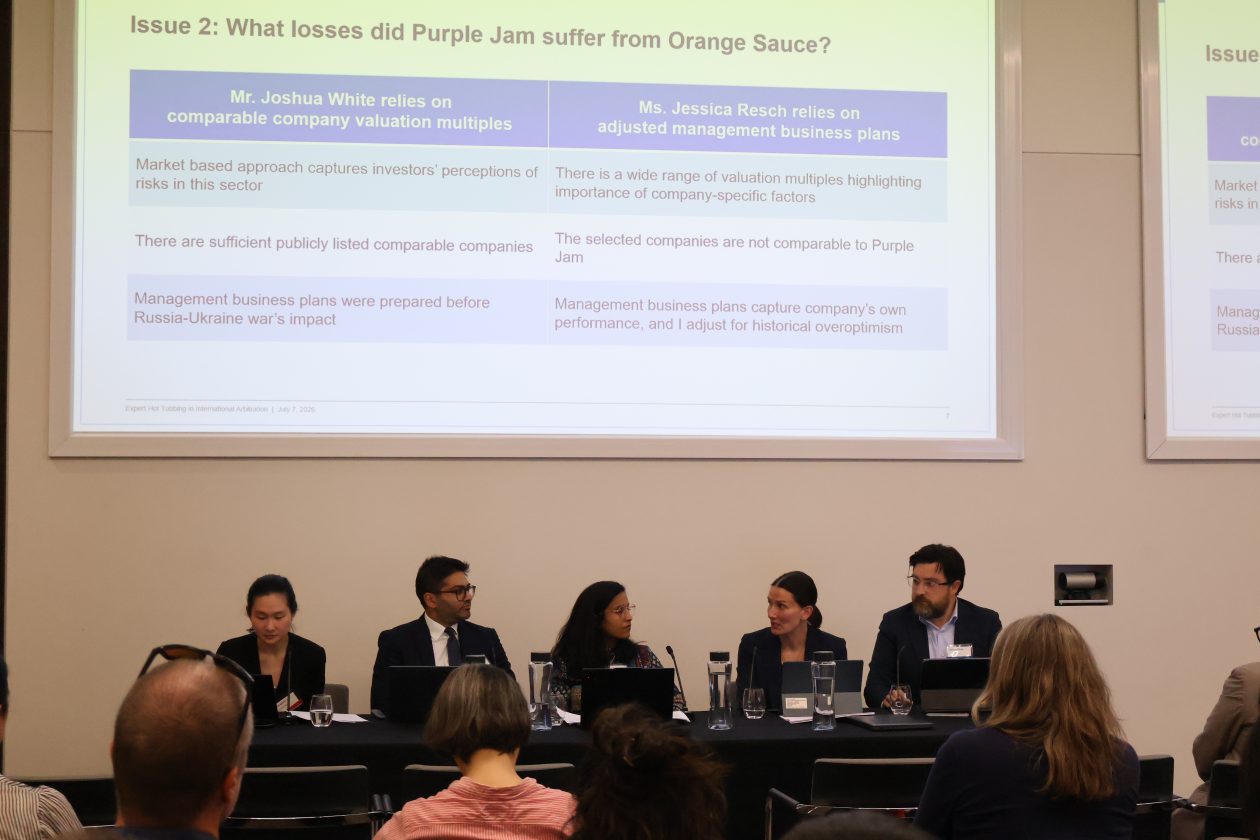
Panellists: Ms. Evangeline Tsui (Latham & Watkins), Mr. Arjun Dasgupta (Analysis Group), Ms. Shreya Ramesh (Latham & Watkins), Ms. Jessica Resch (Analysis Group), Mr. Joshua White (Analysis Group).
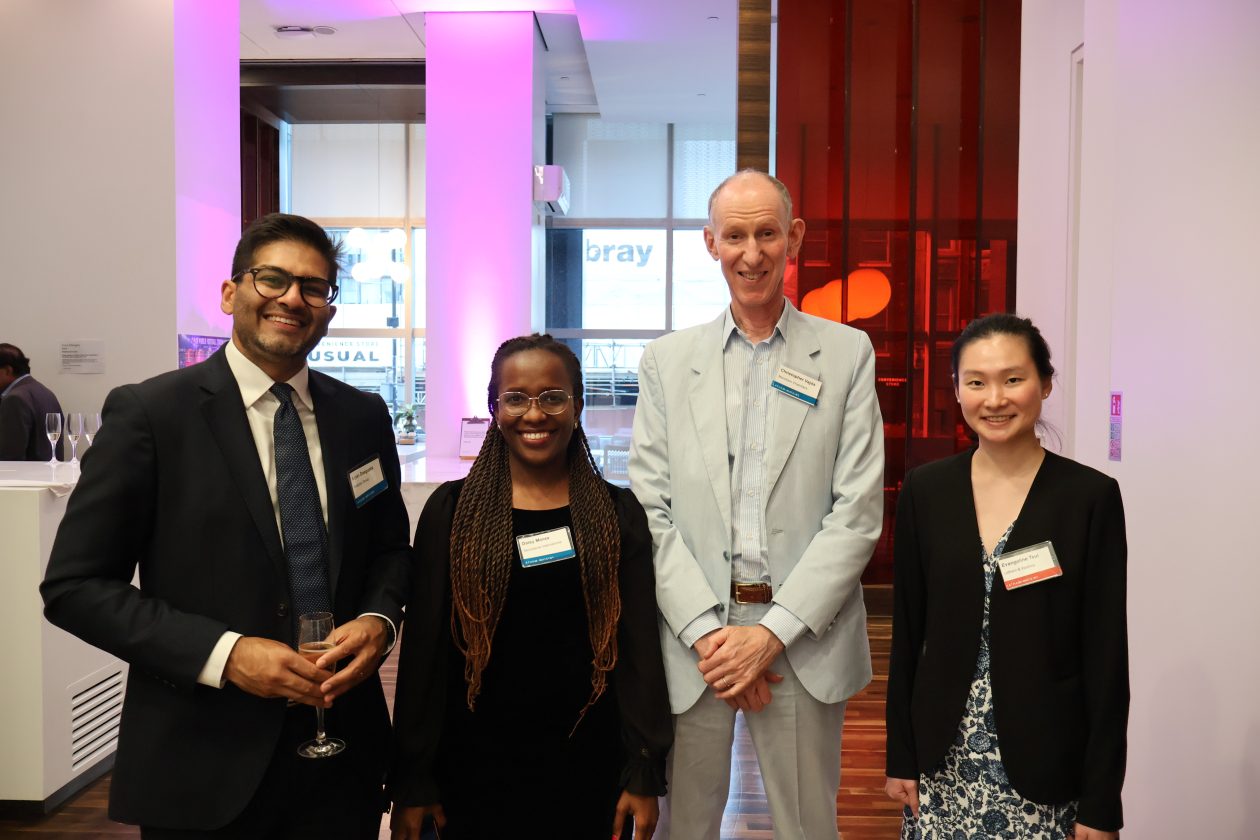
Networking drinks following the session, which was joined by Sir Christopher Vajda KC (Vice Chair of the London Branch of the Chartered Institute of Arbitrators).